Acidic Foods & Your Teeth
How acid damages your teeth
Tooth enamel is the hardest substance in your body, but it has one weakness: acid. Laboratory studies show enamel begins to dissolve at a pH of about 5.5 or lower. Dentin, the softer layer underneath, is vulnerable at an even milder pH of around 6.7.
For reference, water sits around 7. Most sodas, juices, wines and sports drinks fall between 2 and 4. On the pH scale, each step down is ten times more acidic, so a drink at pH 3 is about 100 times more acidic than one at pH 5.
Acid hurts teeth in two connected ways:
It softens enamel directly. Every time you sip something acidic, the surface of your enamel softens and loses minerals. Your saliva works to neutralize the acid and rebuild that surface, but it needs time, usually 30 to 60 minutes. If acid exposure keeps happening, the softened layer wears away for good. This is called dental erosion, and lost enamel doesn't grow back.
It sets the stage for cavities. Cavities form when bacteria in plaque feed on sugars and produce acid of their own. Enamel that's already thinned and weakened by dietary acid has less defense against that attack, so decay can start sooner and spread faster. Many acidic drinks are also sugary, which delivers both problems in one sip.
Signs of acid erosion include sensitivity to hot or cold, teeth that look yellower (as thinning enamel shows the dentin beneath), edges that look clear or chipped, and small dents on chewing surfaces.
Where acid hides in your diet
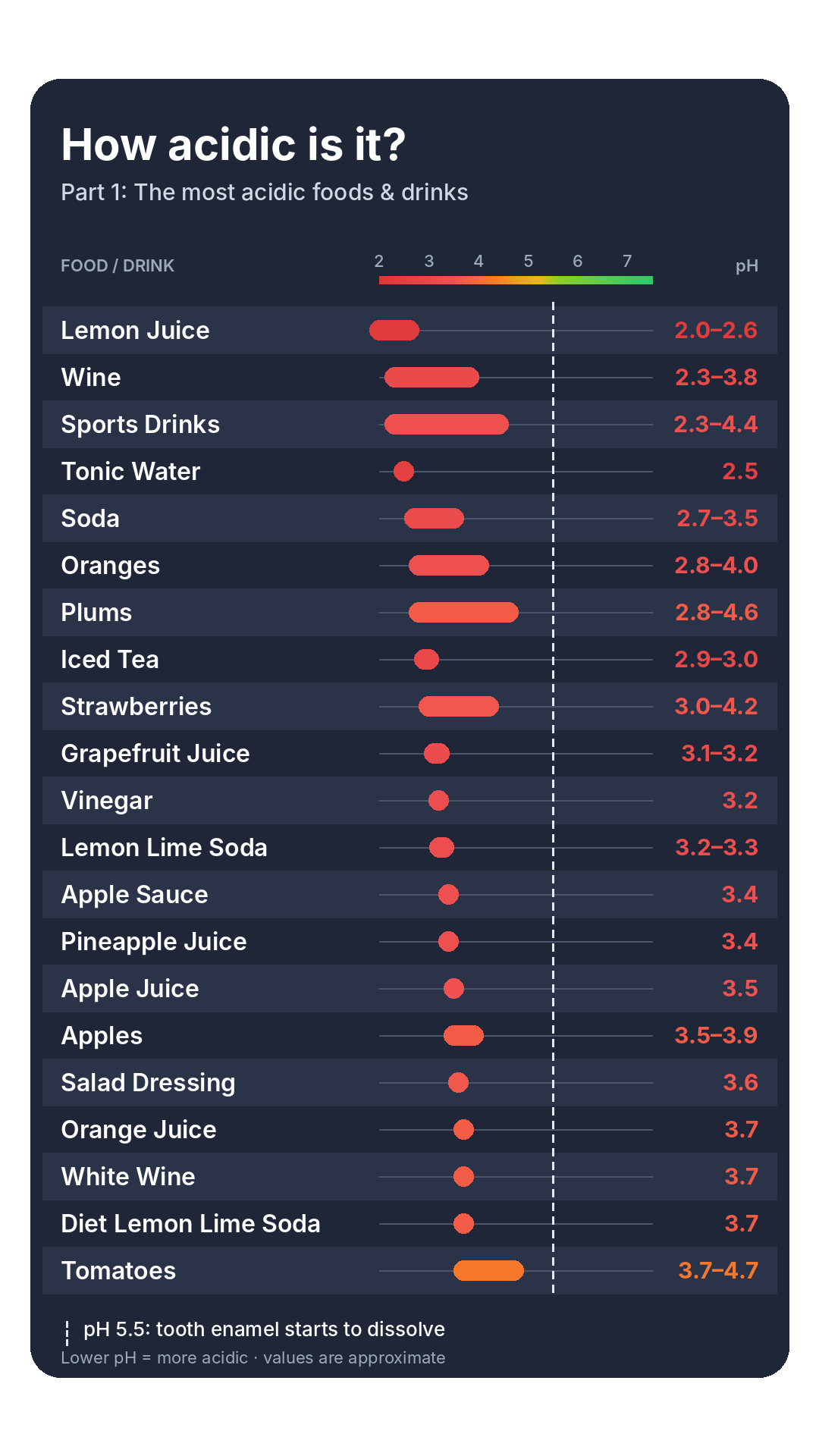
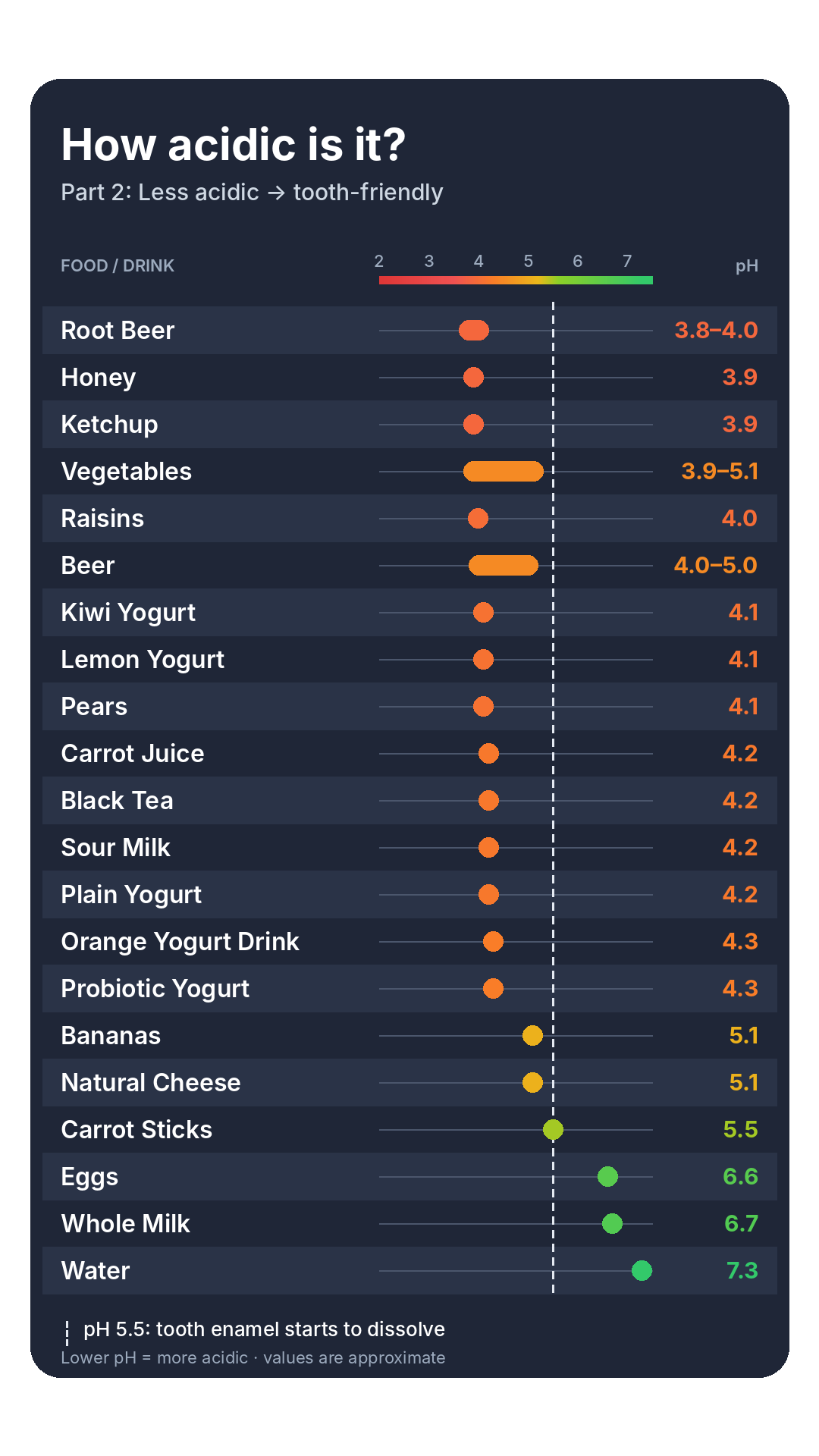
Some of the most acidic items on the list may surprise you. Here's how common foods and drinks compare (typical pH ranges):
Most acidic (pH 2.0–3.0): lemon juice (2.0–2.6), tonic water (2.5), wine (2.3–3.8), sports drinks (2.3–4.4), soda (2.7–3.5), iced tea (2.9–3.0)
Very acidic (pH 3.0–3.9): grapefruit juice (3.1–3.2), vinegar (3.2), lemon-lime soda (3.2–3.3), pineapple juice (3.4), apple juice (3.5), orange juice (3.7), diet lemon-lime soda (3.7), salad dressing (3.6), honey (3.9)
Still below the enamel danger line (pH 4.0–5.5): beer (4.0–5.0), flavored yogurts (4.1–4.3), black tea (4.2), bananas (5.1), cheese (5.1)
Tooth-friendly (pH 5.5 and up): carrot sticks (5.5), eggs (6.6), whole milk (6.7), water (7.3)
A few takeaways stand out. Diet soda is nearly as acidic as regular soda, so switching to sugar-free removes the sugar but not the acid. Sports drinks are among the harshest options, even though they're marketed as healthy. And lemon water, a popular morning habit, is one of the most acidic things you can sip on.
pH values are approximate and vary by brand, ripeness and preparation.
How to protect your enamel (without giving up your favorites)
How often your teeth meet acid matters more than how much. A glass of orange juice with breakfast is far easier on your teeth than sipping it over an hour.
Enjoy acidic drinks with meals. Eating boosts saliva flow, which helps neutralize acid faster.
Don't sip all day. Finish acidic drinks in one sitting rather than nursing them for hours.
Use a straw. It helps drinks bypass your front teeth.
Rinse with water afterward. A quick swish helps wash acid away and bring your mouth back toward neutral.
Wait 30–60 minutes before brushing. Brushing right after acid exposure can scrub away softened enamel. Give your saliva time to do its job first.
Finish with something neutral. A piece of cheese or a glass of milk after an acidic snack helps balance things out.
Chew sugar-free gum. It stimulates saliva, your mouth's natural defense.
Use fluoride toothpaste and a soft-bristled brush. Fluoride helps strengthen enamel, and gentle brushing protects it.
Make water your go-to. Save sports drinks for intense, long workouts, and reach for water the rest of the time.
We're here to help
Enamel erosion happens slowly and often without pain, which is why regular checkups matter. At your visit, we can spot early signs of erosion and decay, talk through your diet and habits, and recommend options like fluoride treatments or sealants to give your teeth extra protection.
If you've noticed new sensitivity, discoloration or changes in the shape of your teeth, let us know. Catching acid wear early makes it much easier to treat.
Ready for your next checkup? Schedule an appointment with Corwin Family Dentistry today.